


Choosing Lab-Grown Diamonds Every Time
//Sponsored by Infinity Diamond Jewellery

Making good, sustainable and ethical decisions when it comes to buying anything – food, clothes, furniture – seems to have become harder and harder. There are so many more questions I’ve started asking myself – where does it come from? How did it get here? Why am I buying strawberries from Morocco in the supermarket, when there are so many British producers… or I could grow them myself in the garden…?
Keeping check on all the various elements of the buying process, even for something as simple as milk or strawberries, has become quite overwhelming, and I’m sure I’m not the only one. However, as consumers, we have a huge impact on which industries thrive and which don’t – and if you didn’t know you were in the possession of such power, allow me to bubble it up to the top of your brain. You’re like He-Man. Or She-Rah. You have the power – use it wisely.
One thing I have never had to buy and have therefore given very little thought to over the years, are engagement rings. Buying diamonds was never really very high up on my radar, so I’ve known very little about the process or the journey they take before sitting, glinting in the jeweller’s shop window. However, my sustainability radar has become a bit more highly tuned over more recent years and I’ve found myself learning about things that otherwise, I think I’d likely know diddly squat about.
The world of engagement rings is one full of romance and magic. Hope and promise. And purchasing one is a huge decision for whomever is thinking about popping the question. But it’s rare, I think, for someone to be considering whether the decision to purchase a diamond engagement ring is ethical or not. It’s just What You Do.
And this is why I wanted to write this piece.
I’ve discovered something pretty radical, I think, about the world of diamonds, and I would very much like to share it with you!
Ultimately, there are two different types of diamonds – earth-grown (which need to be mined) or lab-grown – speaks for itself.
The negative global impacts of traditional gold and diamond mining are widely reported as causing a number of environmental issues that directly affect not only the local people and wildlife (toxic waste, modifying the land, decreasing biodiversity etc) but also the entire Earth’s ecosystem. It’s Big Stuff. So this topic massively piqued my interest.
I immediately assumed that lab-grown diamonds would be a poorer cousin of the ‘real thing’. That they wouldn’t be ‘real diamonds’. But this is where my RADICAL NEWS comes in – they are. Lab-grown diamonds are chemically, physically and visually IDENTICAL to mined diamonds – the only difference is their origin. Now take your chin up off the floor. Let me tell you more.
Are lab-grown diamonds certified and graded on the same scale that mined ones are?
Yes. Yes they are., Lab-grown diamonds are graded using the exact same standards that are used for mined diamonds and are graded based on the diamond’s four Cs — colour, cut, clarity, and carat.
“Visually, lab-grown diamonds and mined diamonds are identical; even to a professional, they would be indistinguishable. In order to differentiate a lab-grown diamond from a mined diamond, the stones would need to be tested using a highly specialised machine. That being said, lab-grown diamonds that are certified by a large lab and will have a laser inscription on the girdle of the stone. The laser inscription will indicate “ Lab-Grown,” along with the diamond’s certification number. “
Infinity diamond jewellery
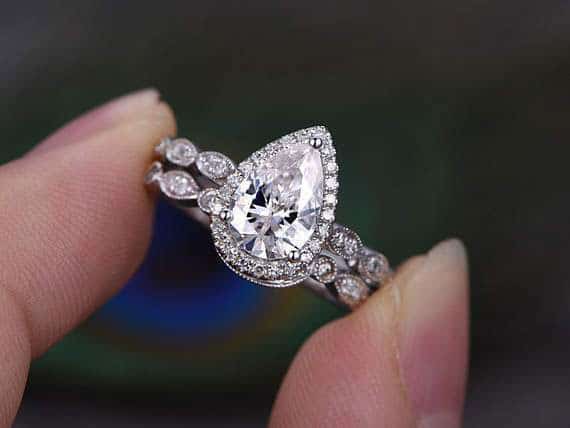
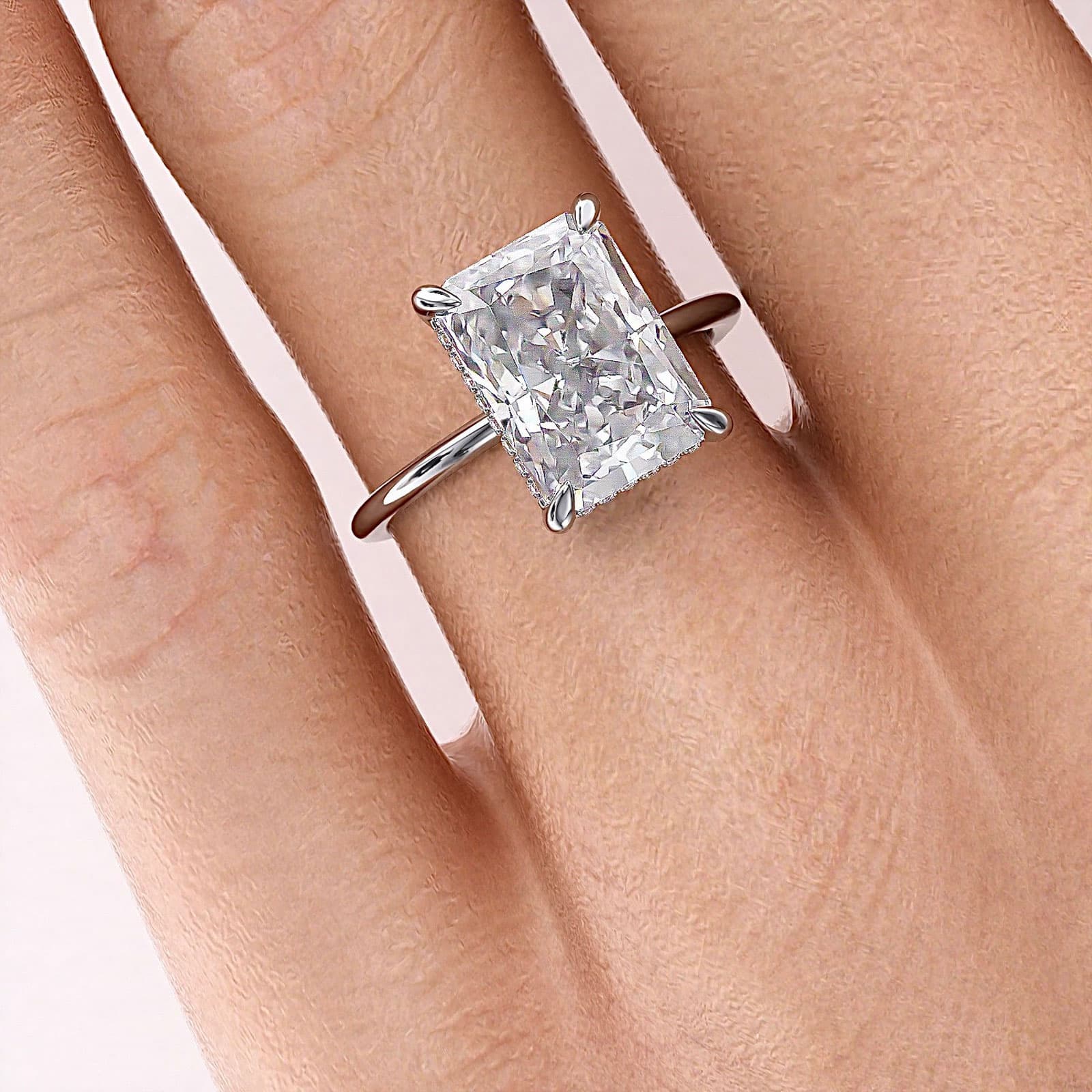
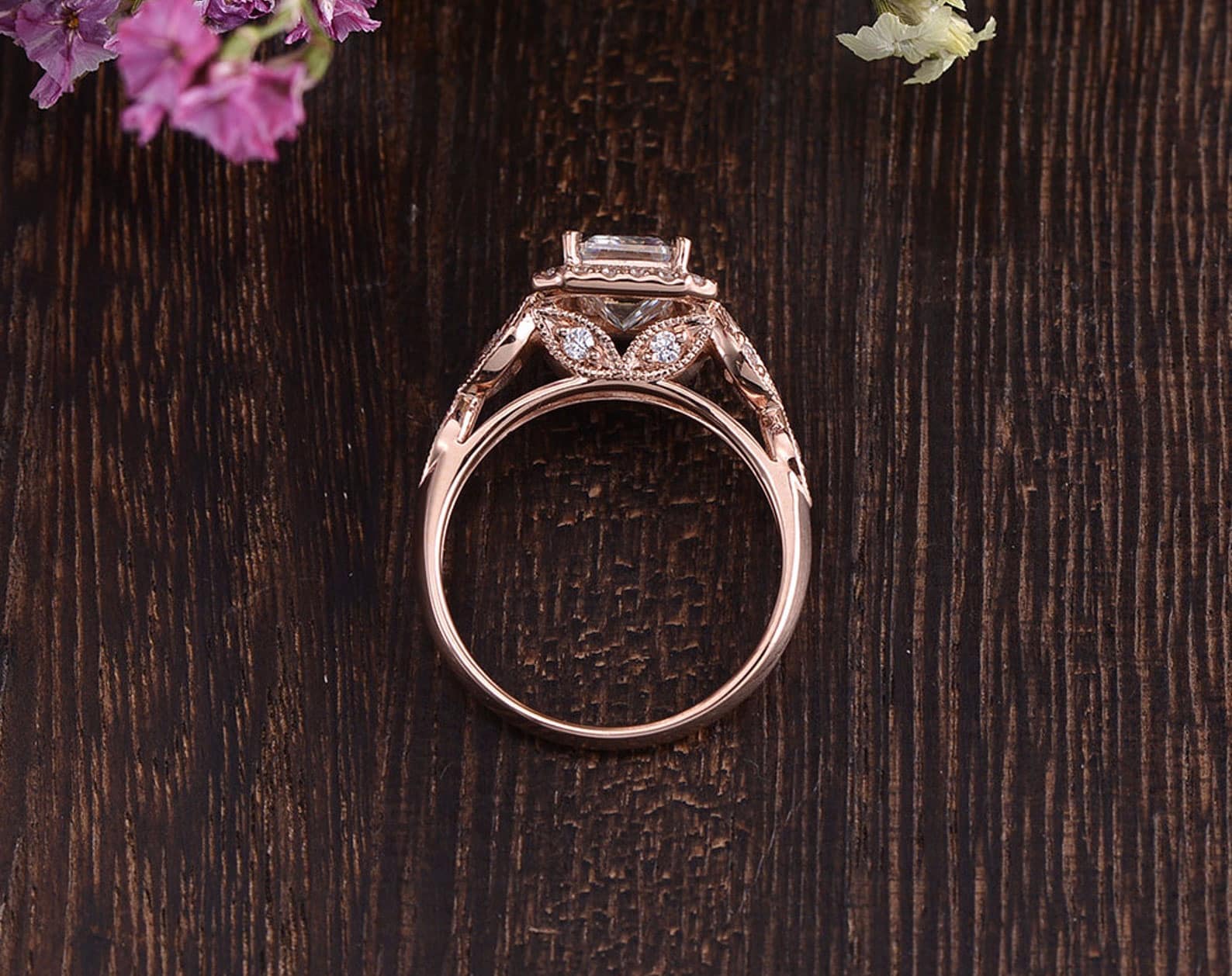
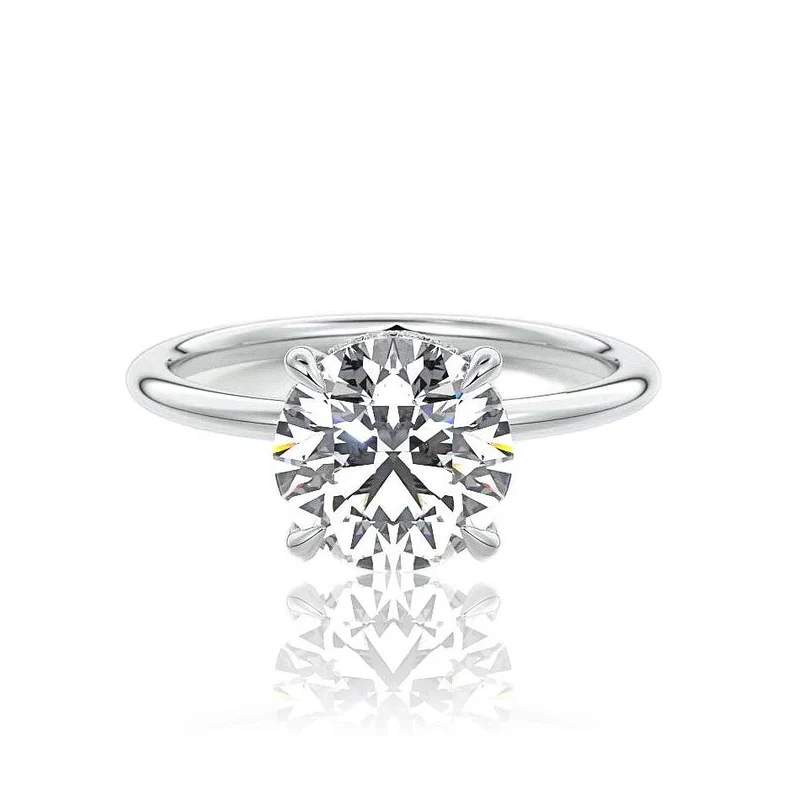
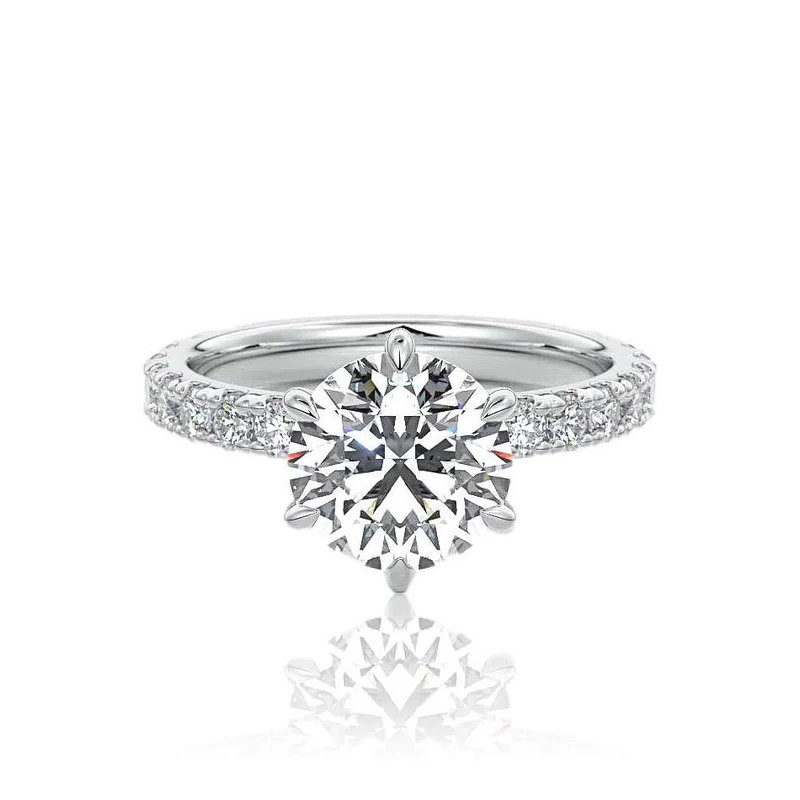
To cement my point further, have a look at these examples of these lab diamond engagement rings – I certainly wouldn’t be able to tell the difference between these and mined diamonds – could you?
How are lab-grown diamonds grown?
Ok, this is a bit sciency, but bear with. It’s fascinating. There are two processes that the lab-grown diamond can go through. Firstly – HPHT (High Pressure High Temperature) and secondly, CVD (Chemical Vapour Deposition). The HPHT diamond begins its life as a tiny diamond seed, which is then placed into carbon and exposed to incredibly high temperatures and pressure – very similar to the conditions beneath the earth’s surface.
Separately, the CVD diamond begins as a thin slice of the diamond seed. It is placed in a highly heated chamber and filled with carbon-rich gases. The carbon bonds with the diamond seed and – hey presto – it crystalizes.
Are lab diamond engagement rings cheaper?
Lab-grown diamonds cost usually at least 20-30% less than mined diamonds (matching like-for-like). Better news – in some cases, especially if you’re buying larger stones – savings of 50-70% can be snapped up. (Is your chin still on the floor?)

How long does the process take?
Lab-grown diamonds can be grown a bit quicker than 1 – 3.3 billion years, It’s more like somewhere between 6 and 12 weeks. You weren’t expecting that, were you?
There really is no contest in my mind and should I ever be in a position where I needed to buy a diamond, I’m confident that despite the romance and magic of discovering stars in the earth, I care for my beautiful planet (and wallet) too much to be swayed.
It’s been quite the eye-opener for me – I wonder if it has for you?




JUDITH
Wow Poppy! Who knew? Such an interesting read – well done!
Natalie
Wow these really are incredile diamonds!! I’m currently looking for an eternity ring, which design would you recommend? Thank you