

“Where there’s tea, there’s hope”

“Where there’s tea, there’s hope.”
– Arthur Wing Pinero
There’s just something about tea, isn’t there? A quiet comfort, a steadiness, a routine and a thread that runs invisibly through generations…
Tea lifts the spirits and brings people together gently, in a way that very little else can. “Fancy a cuppa?” “How do you take it?” “Put your feet up and have a brew…” ‘Tea speak’ has become part of our everyday vernacular and I love the instant connection and closeness I feel to anyone, whom I’m sharing my teapot with.
At the heart of everything I do is my love for community – whether that be a family gathering, introducing friends to other friends or my book club. Bringing people together is something that makes my heart sing and always, always… there is tea, celebrating the coming together of folk.
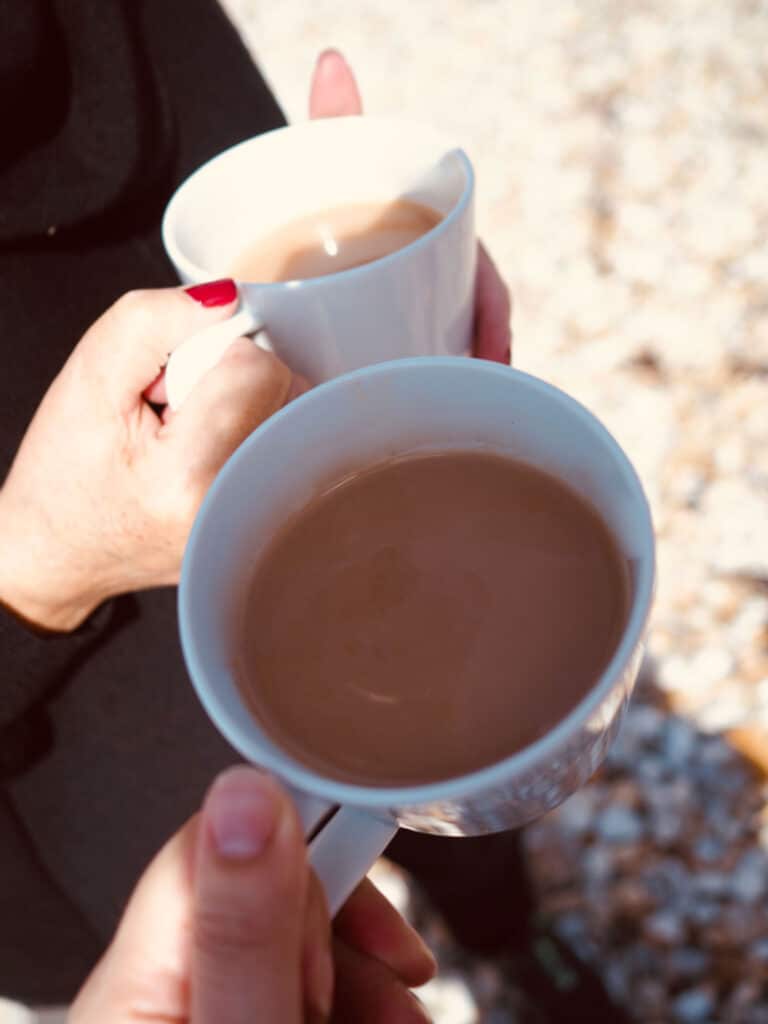

Conversations are had, natterings, chatterings… and an ease amongst everyone as they share the same common denominator. It’s almost a peace-keeper. Tea should be at all negotiations. And who knows what might have occurred if there’d been a teapot nestled upon King Arthur’s Round Table…
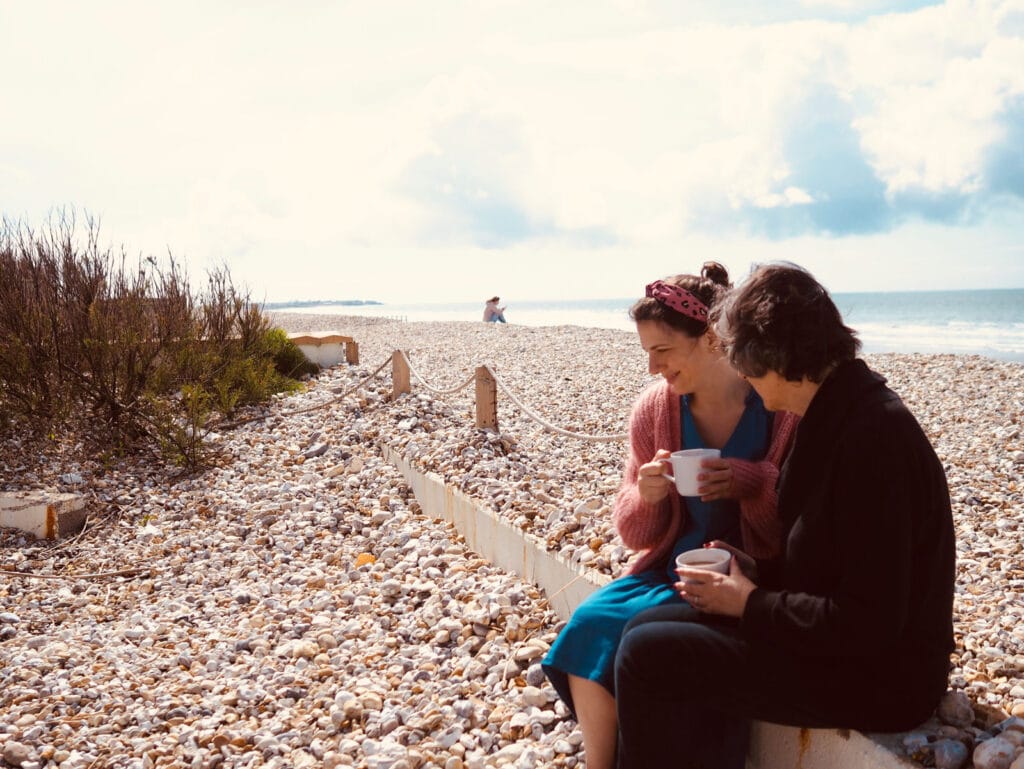
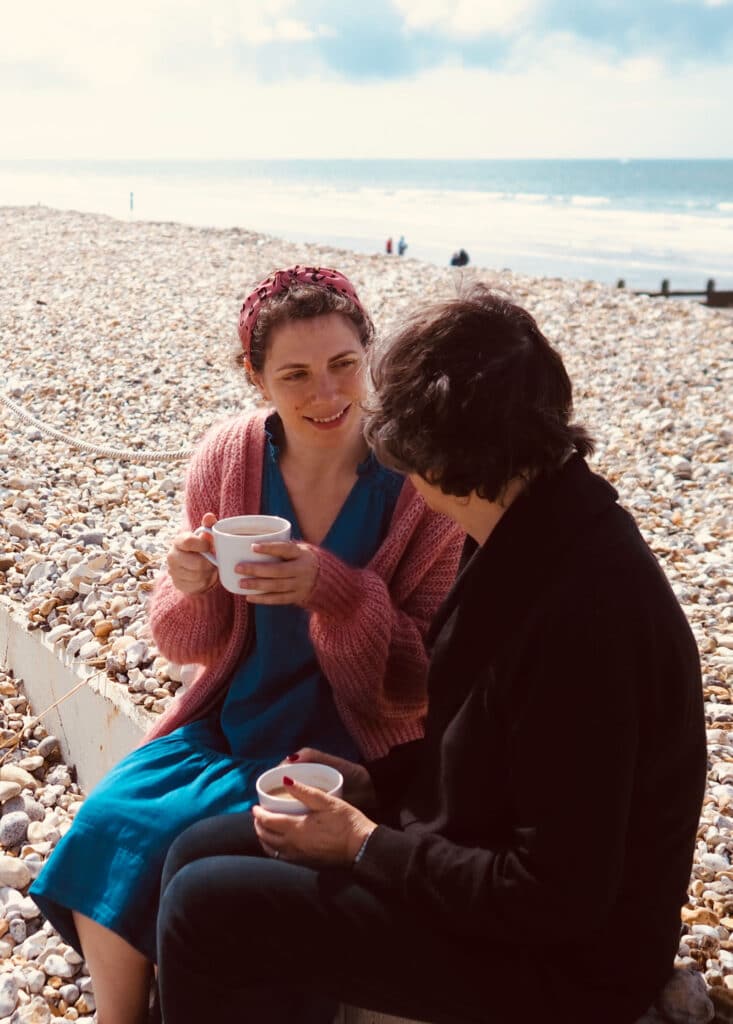
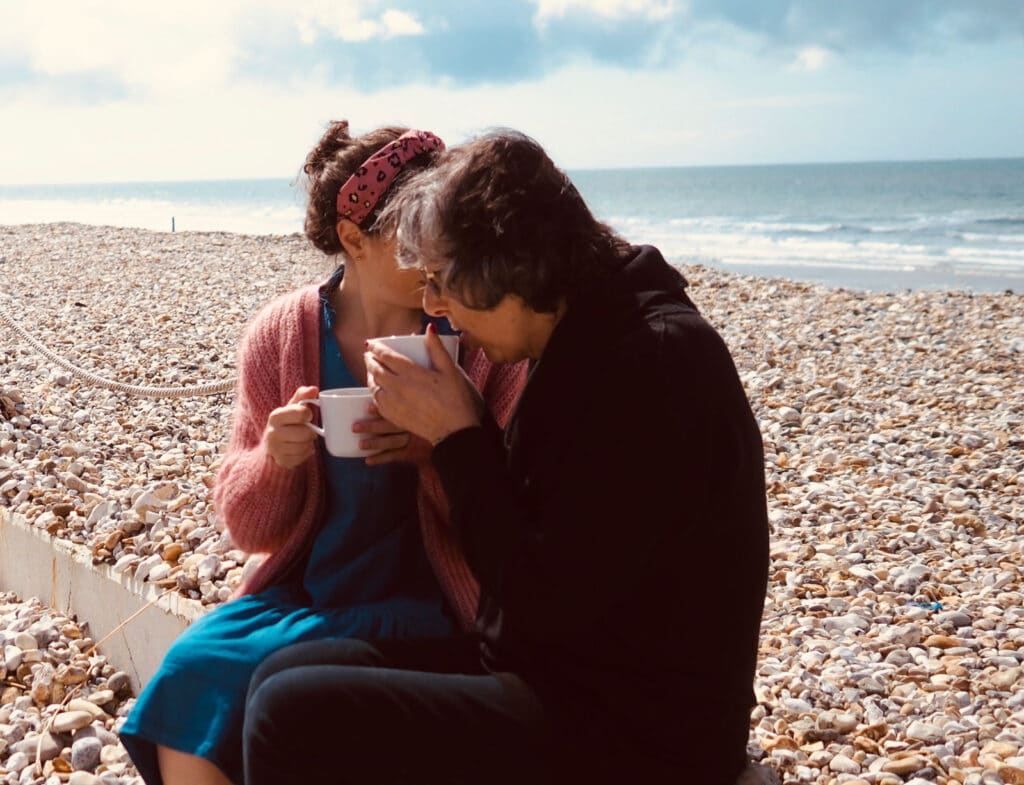
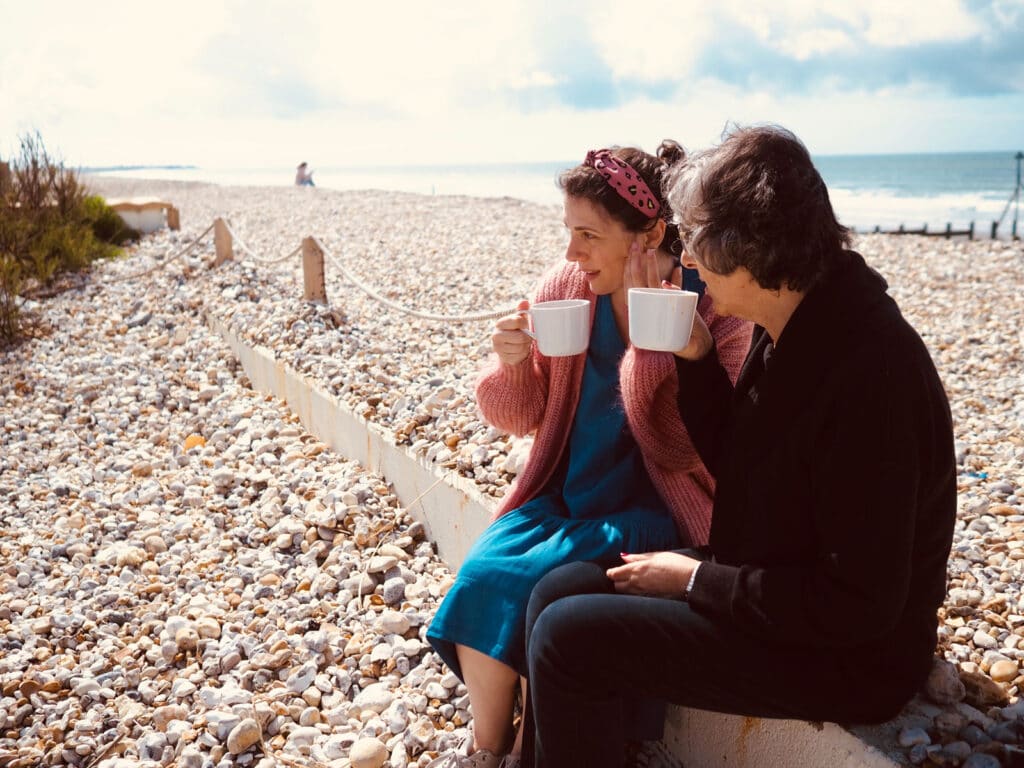
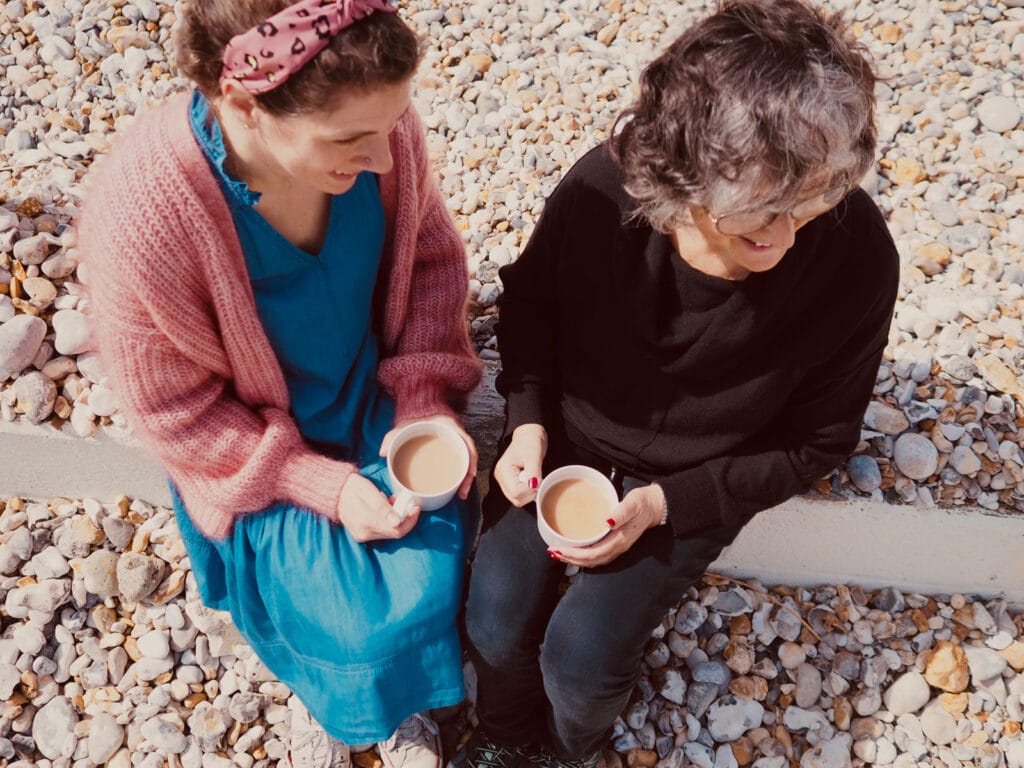
As soon as we were allowed, I headed to the seaside and got to hug my mum for the first time. And not just that, we sat on the beach and chatted over a cuppa. Proper chats. Big chats. Important conversations about this and that and how 3 year old daughters are extremely hard work 😉 (Sorry, mum!)
As we made our tea, I realised that I moved about the kitchen in the same way as her. We chose similar mugs, brewed our tea for the same time, took out the teabag in the same silly way (fished it out with a teaspoon then waddled over to the bin on the other side of the kitchen, trying not to make a mess on the floor with the soggy teabag…) It really struck me how in tune we were over our tea making.
Apparently, this is to be expected! According to a new independent research study, commissioned by the Tea Advisory Panel, 6 in 10 of us share the same tea drinking habits as our parents and children… so it’s no wonder we both do the tea waddle!

I know I’ve mentioned this before, but it feels too important to not again – the impact that tea can have on our mental health is immense. And not just because of all the clever science within the tea itself, but because of our behaviour around it.
A fascinating aspect of the new commissioned research was that even the aroma of tea has an impact on how people feel and think, a fact supported by the new systematic review led by Dr Tim Bond, which investigated data on the effects of tea when it comes to our cognition, brain and mind health. More than half of Brits say they feel cosy, happy and relaxed – as well as energised – when they get the first sniff of a freshly brewed cuppa. Tea aroma also makes a third think about their parents while around a fifth remember their grandparents or hark back to childhood camping trips… my big memory is camping in the garden, listening to cassettes and drinking tea out of a flask with my dad. Also, my grandpa’s greenhouse… he always had a cuppa after tending to his beloved tomatoes 😉
There are so many different types of tea and each has its own special super powers, whether that be improving our concentration or helping us to relax before we go to bed…
To celebrate all these teas and to mark International Tea Day (today!) The UK Tea and Infusions Association has created a series of podcasts, called ‘Around the Word in 80 Teas – The First Few Stops’. Dr Sharon Hall, Chief Executive of the UKTIA, and her co-host, Will Battle, author of the World Tea Encyclopaedia, discuss some very different teas from around the world that are all produced from Camellia Sinensis tea bushes.
“This is a UN designated day, designed to promote activities in favour of the sustainable production and consumption of tea and we hope through the podcasts we will encourage tea drinkers to drink more and to learn more about tea, experiment with what they drink and to add to the pool of tea drinkers.” – Dr Sharon Hall
In the poll they commissioned, it became clear that more of us are drinking tea at different times of the day, with English Breakfast being a firm favourite in the morning, Darjeeling, Lady Grey or Earl Grey are being drunk in the afternoon, while herbal teas are reserved for the evening. 40% of people in the poll say they typically drink more than three different teas in a week…. And I realised, I am the same! I’ll have Earl Grey in the morning, maybe Lady Grey in the afternoon and I have a cupboard bursting with herbal teas, which I’ll sip in the bath, in front of the telly or in bed!

I’ve listed the podcasts episodes and relevant teas at the bottom of this post and you can listen to them here.
I hope you all can have a cuppa and a hug with your nearest and dearest very soon indeed, and feel the beginning of a new chapter…
What a time we have all had! But through it all, there has been tea. It hasn’t wavered. It remained a constant. And to be able to share it again, with my mum and family and friends, is very special indeed.
Stick the kettle on, and crank up the podcasts!
Onwards.
*Dress: Me+Em
*My pink cardigan: Sézane
_________
The Around the World in 80 teas podcast series will explore the following teas:
China- Long Jing – the Imperial tea
A green tea whose name translates as Dragon Well, the leaves are pan-fired by artisans and the very finest teas are traditionally produced in spring before the Qing Ming Festival. It has a beautiful balance of aroma and delicate toastiness, and is perhaps the easiest way to understand green tea. Legend has it that the Qianlong Emperor in the 18th century visited Long Jing and was given a cup of the tea which impressed him so much, he conferred imperial status on the 18 tea bushes. Tea is still harvested from these today and fetches a higher price per gram than gold.
India -First Flush Darjeeling – the Himalayan tea
Often called the champagne of teas, Darjeeling is a district in the foothills of the Himalayas here dominated by the8,586m Mt. Kanchenjunga – where severe weather patterns produce the tea’s exquisite flavour and aroma. With the tea plucking season starting in February, enthusiasts compete to buy the first batch of the first flush – called DJ01. Darjeeling can be used to make excellent Kombucha –the hottest ticket in the current boom of no- and low-alcohol ‘grown-up’ drinking options.`
Kenya – Small holder tea – the Volcanic tea
A beautiful, golden tea produced by skilled smallholders living in the high lands east of the Great Rift Valley. Here, the humus filled volcanic soils, high rainfall and warm temperatures create the right environment for healthy bushes whilst the skilled smallholders ensure excellent tea quality. Currently, the UK imports most of its black tea from Kenya as its equatorial location ensures year-round picking.
Malawi – black tea – the Red tea
Malawi is the unsung hero of many of the world’s blends, and tea is vital to the economy of Thyolo and Mulanje, the two main planting districts. Malawi is blessed with a benign climate, the awe-inspiring Mount Mulanje, and some very special cultivars that produce a beautiful and much-sought-after reddish-coloured tea. Malawi First Flush teas are highly sought after since the country has become a more popular tea growing region for the UK market.
Russia – Caravan – the Smoky tea
While most Western European countries received their China tea by sea, the early Russian supply was imported along the ancient trading route known as the silk road. The year-long journey on camel-back, across dangerous terrains, lent the teas a distinct smoky flavour thanks to their proximity to countless night time campfires. We no longer have the camel caravan but we still have Lapsang Souchong, a tea given its prized smoky flavour by the more modern practices of burning pine wood.
Sri Lanka – High grown – the Extreme tea
Altitude and the seasonal impact of the monsoons have a major impact on tea taste and quality since the extreme temperatures – for tea growing anyway – place the tea plants under stress. This creates some amazing flavours which are aromatic, intense and sometimes accompanied by highly prized menthol notes. High grown teas from Sri Lanka are typically copper-coloured and include Uva and Dimbula teas. Premium English Breakfast blends often contains High-grown Ceylon teas.
Japan – Gyokuro & Matcha – the Shaded teas
Green teas from Japan, especially Guykuro, are created by placing the plants under almost total shade prior to harvest, a process known as ooshita which causes special sweet notes –to develop. Matcha is another example which is grown in shade for around 3 weeks. During this time, chlorophyll and amino acid levels build up in the leaves creating the unique flavour and intense green colour. Matcha is the go-to tea for the famous Japanese tea ceremony and is steeped in ritual and protocol. It’s also increasingly used as a food ingredient and can provide a natural caffeine hit.
China – Oolong- Tieguanyin and Big Red Robe– the Floral teas
The heartland of oolong tea production is China’s Fujian province and Taiwan, these are semi-oxidised teas that vary from greenish rolled oolongs (that give a light, floral liquor reminiscent of lily of the valley, narcissus, orchid or hyacinth) to dark brown leafed oolongs (that yield liquors with deeper, earthier flavours and lingering hints of peach and apricot). Here we taste Tieguanyin, the ultimate tea for those who don’t like tea with its seductive floral notes, and Big Red Robe (Da Hong Pao) which demonstrates the diversity in oolong with its deeper character and intense minerality.
India – Assam second flush – the Strong tea
Assam is another popular tea in the UK and is often used in Breakfast blends. Assam is heavily seasonal with the best quality arriving during the second flush which is marked by a malty rich thickness with great full-bodied mouthfeel. The secrets to the flavour are the rich alluvial soils sitting alongside the floodplain of the Bhramaputra river, combined with the unique period in the season just after the bush awakes from its dormancy but before the full impact of the monsoonal rains. This is the one tea that definitely needs milk to offset its intense, rich flavour.
UK – English Breakfast Tea – the Wake-up tea
Regular ‘black’ tea is by far the most popular drink consumed in Britain today, apart from tap water, with over 100 million cups enjoyed every day of the year. English Breakfast is a blend of many of the teas we’ve visited already on our world tour – including Kenyan, Ceylon and Assam – so it’s truly an international drink worthy of celebrating on International Tea Day
English Breakfast blends are discussed in the company of tea and wine experts, to learn the parallels between the worlds of wine and tea and how the skills of the blender can create something that is more than the sum of its parts.
This post is sponsored by the Tea Advisory Panel
*Contains affiliate links